Cybersecurity Tips for Healthcare Facilities in 2023
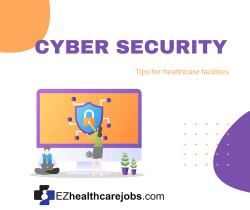
It’s no surprise that the COVID-19 pandemic spurred major shifts in the healthcare industry, one of which being the shift to telehealth options and more compatible apps and patient portals. This shift does not look like it will slow down anytime soon, so it’s important for your healthcare facility to consider what changes are on the way and what may be needed for better computer security in 2023.
~a 5-minute read
Top Shifts Expected to Transform the Healthcare Ecosystem in 2023
• Telehealth/ Telemedicine
The pandemic expediated the industry shift to telehealth. According to a report listed on Healthcare Dive, the costs of medical services involving telehealth could rise by 265% between 2020 and 2023. Industry researchers predict that patients who suffer from chronic conditions will be the biggest part of the population relying on telehealth services.
• Costs for Technology and Security
With this expected increase in telemedicine, there will be a requirement to protect these systems with monitoring systems to comply with the Health Insurance Portability and Accountability Act of 1996. This will set up for closer monitoring of patient safety in medical devices and tighter IT practices in the healthcare sphere.
• Remote Patient Monitoring
The pandemic definitely called attention to the need for telehealth and remote monitoring of patients. This is not expected to decrease anytime soon. So, consider paying particular attention to the remote health scene in 2023.
• Online Patient Portals
With telehealth on the rise, making it convenient for patients to interact with their doctors, it can be assumed that there will be a correlating increase in the use of online patient portals. This increase can ease the burden for administrative workers in healthcare as well. This shift will of course require healthcare facilities to pay attention to cybersecurity to keep patient data confidential while also allowing patients to have more ease when interacting with their doctor.
• Healthcare Technology Improvements and Changes
The healthcare industry is always changing and advancing, and you don’t want your facility to end up playing catch up. So, take some time this month to consider what changes your facility may need to implement for better health outcomes in the coming year.
• Pharmacy and Pharmaceuticals
“Pharmacists and pharmacy technicians are often the most accessible healthcare providers in their communities. Both roles will continue to see an evolution in their scope of practice to include direct patient care that will only increase in the year ahead.” - Annie Lambert, PharmD, BCSCP, Clinical Program Manager
• Virtual training and education
Much like how patients are expected to make more use of telehealth and telemedical services, it can be expected that nurses and other healthcare workers will flock to virtual trainings and education tools. This can be a great opportunity for healthcare administrators to take a look at their training programs and make shifts that will draw more interest from younger healthcare workers. This can be incredibly significant to your facilities ability to combat the staffing shortages that have plagued the industry this year.
• Cloud Computing for Outsourced Billing
The pandemic has highlighted the staffing shortages with which healthcare centers have been grappling. Some industry researches suggest that the healthcare labor force in New York may drop as much as 500,000 by 2026. According to the Advanced Data Systems Corporation, one result of this shortage is predicted to be a change in medical billing to be timelier and more efficient. This may lead to an increase in outsourcing for billing specialists or third-party medical billing companies.
• AI in Healthcare
AI has already begun to carve out a place for itself in healthcare. We can see this in robotic collection calls and medical billing. AI may also advance to be used more for administrative medical tasks and maintaining patient records.
Cybersecurity Tips for Healthcare Facilities
Cyber Security Tip 1.) Establish a Culture of Cyber Security
Security professionals almost all agree that the user is the weakest link for cyber security. Regardless of age and education, the idea that cyber security breaches only happen to other people is one of the biggest misconceptions that lead to security infringements. Of course, there isn’t a perfect fix for this concern, but healthcare facilities can focus on providing appropriate education to users, to prevent this mentality. Leaders in healthcare should also lead by example and encourage others to accept accountability for somewhat problematic behaviors/thinking regarding cybersecurity.
Cyber Security Tip 2.) Emphasize the importance of Protecting Mobile Devices
In this age of remote work, mobile devices are being used more and more by at-home or remote workers. Mobile devices are easily misplaced, stolen and subject to electromagnetic interference which can lead to corruption of the information stored on the device. Luckily, extra steps can be taken to secure mobile devices from unauthorized use or access. Making use of password protection features for example, is a simple precaution that can greatly enhance mobile device protection. In addition, devices that do not make use of encryption should not be used to transfer sensitive information. Cybersecurity experts say that in the event where information must be transferred to a mobile device, people should use encrypted files to enhance safety.
Cyber Security Tip 3.) Heavily Encourage the use of Computer Safety Habits
-Software and operating system maintenance is an incredibly important cyber security measure. This maintenance will keep systems updated. Out-of-date systems can serve as a green light for cyber-attacks. The use of anti-malware systems or anti-virus programs to conduct regular scans can help users and facilities stay up-to-date on possible vulnerabilities before they become a problem.
Cyber Security Tip 4.) Use a Firewall
Unless a healthcare facility uses an EHR system that is totally disconnected from the Internet, it should have a firewall to protect against cyber intrusions and threats from outside sources. While anti-virus software helps to find and destroy malicious software that has already entered, a firewall is built to prevent cyber-intrusions from the start.
Cyber Security Tip 5.) Install and Maintain Anti-Virus Software
The primary way that cyber threats enter a system is through viruses and similar code that can exploit the vulnerabilities of the system your facility is using. These software systems require regular maintenance, but are widely available and cost effective.
Concluding thoughts on Healthcare Cybersecurity:
In a technology driven world, it is only a matter of time before the healthcare industry joins the party. The rise of remote learning, remote work opportunities and remote health options is only expected to grow. Start the conversation about your facility's cyber security measures now, and encourage administration to prepare for the “new normal” in health care.
#ComputerSecurityDay, #CyberSecurityDay, #CyberSecurity, #DataSecurity, #HealthcareCyberSafety, #Healthcare, #Telehealth, #Telemedicine, #DHIS, #HIS, #HISSecurity, #HealthIT, #HITSecurity
Sources:
• Department of Health and Human Resources. “Top 10 Tips for Cybersecurity in Health Care.”
• Jain, Sachin H. “Top 10 Healthcare Industry Predictions For 2023.” Forbes. Nov, 2022. https://www.forbes.com/sites/s...
• Rosario, Christina. “Top 6 Healthcare Technology Trends for 2023.” Advanced Data Systems Corporation. Sept, 2022. https://www.adsc.com/blog/top-...
• Wolters Kluwer experts. “Three pillars of healthcare technology predictions in 2023.” Wolters Kluwer. Nov, 2022. https://www.wolterskluwer.com/...